A Partner Adventure with Pride Expeditions
In February 2026, I climbed Mount Kilimanjaro via the Machame Route.
As Founder and Chief Adventure Officer of Pride Adventures, I am always exploring what meaningful active and adventure travel can look like for our community. This particular trek was not a standard Pride Adventures hosted trip. It was a partner expedition hosted by Pride Expeditions out of Wales, United Kingdom, with Just Kilimanjaro serving as our on the ground mountain team in Tanzania.
We joined as participants and partners.
And it became one of the most physically demanding, emotionally powerful, and community building experiences I have ever had.
If you are researching how hard it is to climb Kilimanjaro, what the Machame Route is like, or whether summiting Uhuru Peak is worth it, this guide will give you both the facts and the lived experience.
Mount Kilimanjaro by the Numbers
For those searching the practical details of climbing Mount Kilimanjaro, here are the core stats:
• Summit: Uhuru Peak at 19,341 feet (5,895 meters)
• Route: Machame Route
• Duration: 7 days
• Distance: Approximately 39 miles (62 km)
• Total elevation gain: More than 15,000 feet (4,572 meters)
• Descent: More than 15,000 feet back down
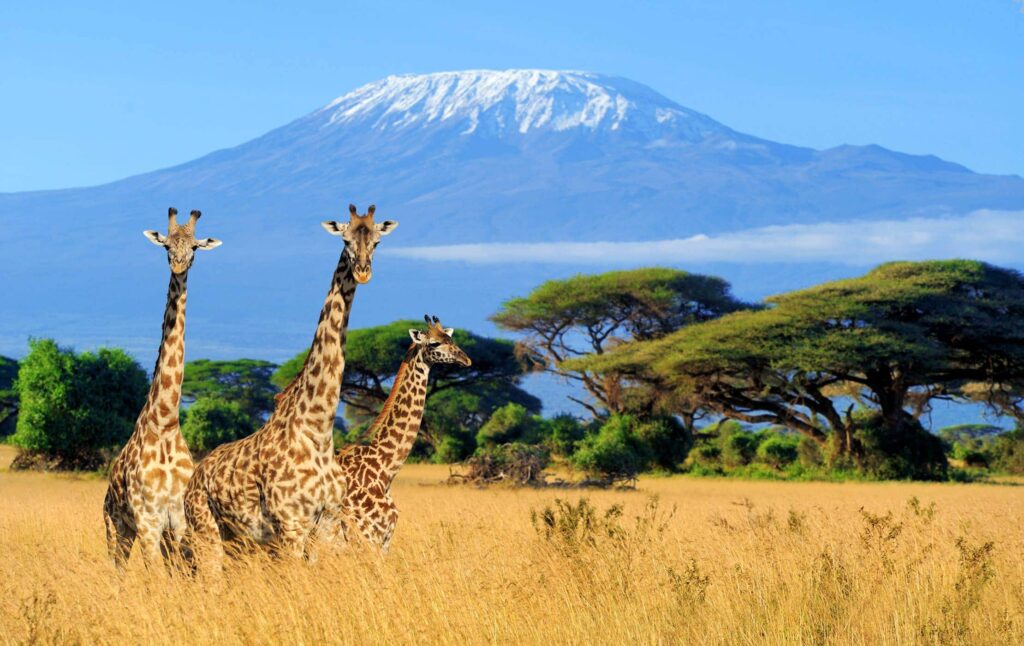
• Highest mountain in Africa
• Tallest free standing mountain in the world
Mount Kilimanjaro is also designated as a UNESCO World Heritage Site.
Kilimanjaro is not a technical climb. No ropes. No mountaineering gear required.
But do not underestimate it.
The challenge is altitude.
Why the Machame Route Is So Popular
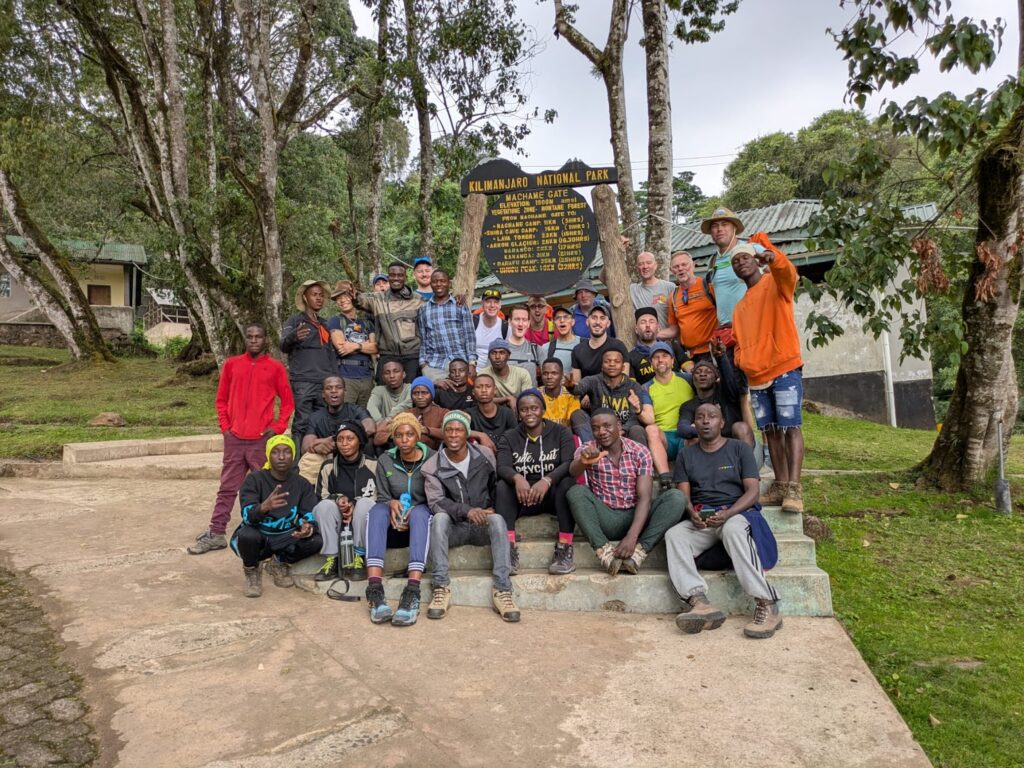
The Machame Route is often called the Whiskey Route. It is scenic, physically engaging, and offers excellent acclimatization because of its climb high, sleep low design.
Rainforest to Alpine Desert
Day 1 begins in dense rainforest at approximately 5,380 feet (1,640 meters). It feels humid and green, not alpine. By the end of the first day, you are already near 10,000 feet (3,050 meters).
Day 2 pushes toward 13,000 feet (3,960 meters). This is when altitude becomes noticeable. Breathing changes. Standing up too quickly makes you lightheaded. Every step requires intention.
Day 3 includes the climb to Lava Tower at roughly 15,000 feet (4,600 meters) before descending to sleep lower. That elevation exposure is critical for summit success.
Climb High, Sleep Low Strategy
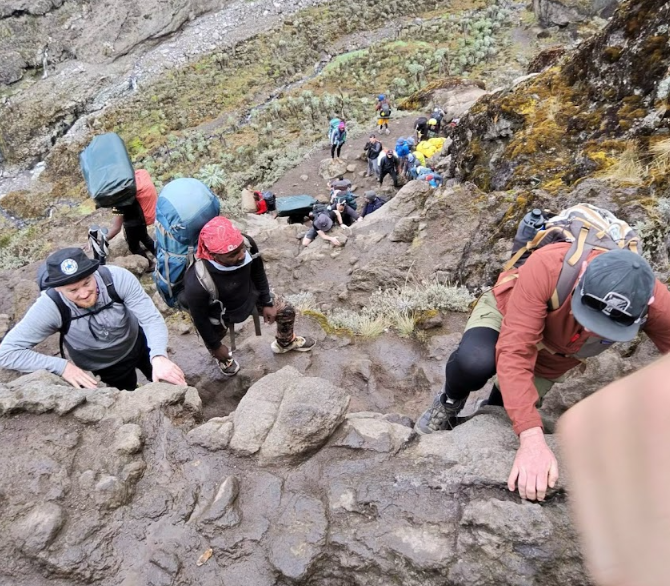
Day 4 brings the famous Barranco Wall. Hands on volcanic rock. Careful foot placement. Porters moving past you with remarkable balance and strength.
By the time summit morning arrives, you have already spent multiple days above 13,000 feet (3,960 meters) preparing your body.
What Summit Morning on Kilimanjaro Really Looks Like
Midnight Wake Up and 1 AM Start
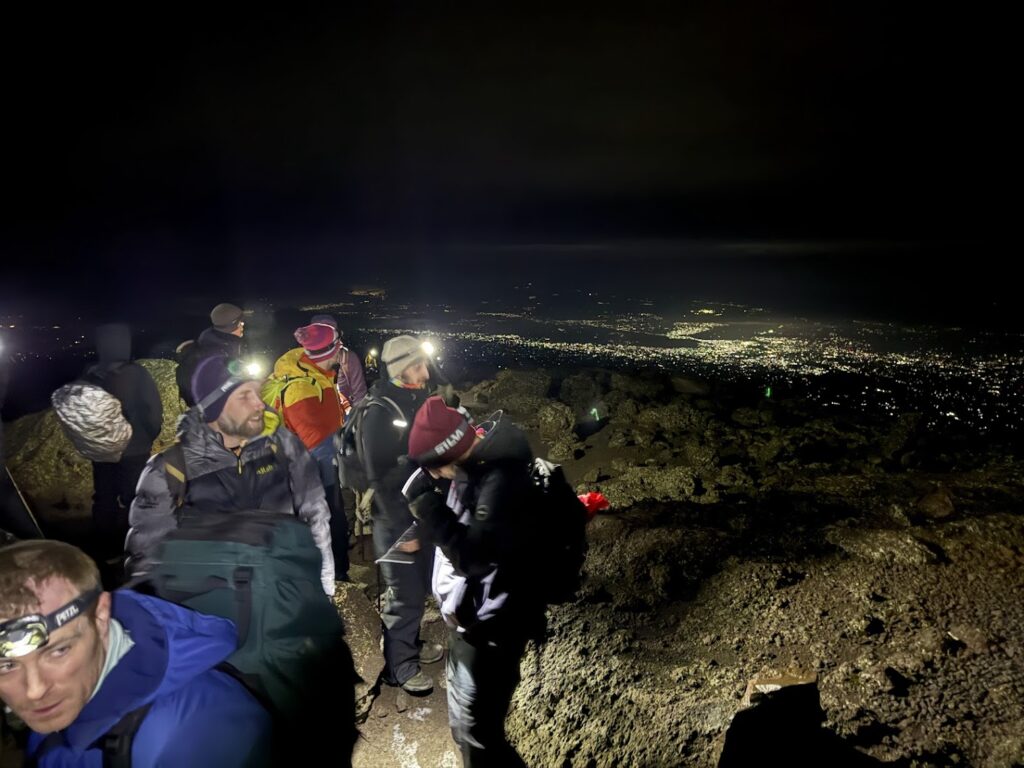
We went to bed around 7:00 PM and woke at midnight. By 1:00 AM we were hiking under headlamps from nearly 15,000 feet (4,600 meters) toward 19,341 feet (5,895 meters) at Uhuru Peak.
“Pole Pole”, meaning Slowly slowly.
Above 17,000 feet (5,180 meters), the body behaves differently. Energy drops. Conversation fades. Breathing becomes deliberate and rhythmic.
The climb in darkness is quiet and focused. You see only the beam of your headlamp and the slow line of lights moving up the mountain ahead of you.
As we approached the crater rim at approximately 18,800 feet (5,730 meters), the first light of morning began to break.
Sunrise at the Crater Rim
The sun rose over a neighboring mountain partially covered in clouds, casting dramatic color across the sky. It was one of those moments where you forget the discomfort for just a second.
Then the singing began.
The porters started “Jambo, jambo bwana,” followed by call and response chants of “More water” and “More fire” as we pushed upward.
When we reached the crater rim, we hugged, celebrated, and caught our breath.
But we were not done.
We still had approximately 700 meters (about 2,300 feet) to traverse across the crater to reach Uhuru Peak.
Those final steps at nearly 19,000 feet (5,800 meters) feel earned.
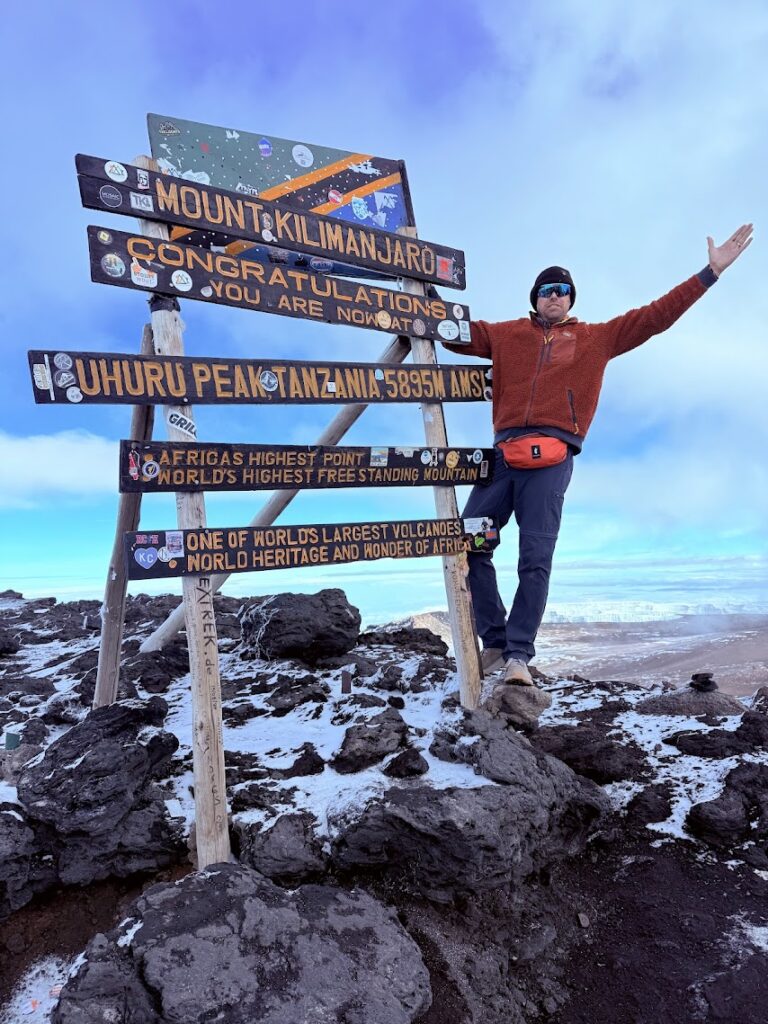
Standing at 19,341 feet (5,895 meters), I cried.
Not from exhaustion.
From gratitude.
How Hard Is It to Climb Kilimanjaro?
Climbing Mount Kilimanjaro is not technical mountaineering. You do not need ropes, harnesses, or prior alpine climbing experience.
However, it is physically and mentally demanding in ways that surprise many people.
The Physical Challenge
Over the course of seven days on the Machame Route, you hike approximately 39 miles (62 kilometers), gain more than 15,000 feet (4,572 meters) in elevation, and then descend the same amount.
The terrain varies dramatically. You begin in humid rainforest, transition through moorland, traverse volcanic rock fields, climb the Barranco Wall, and eventually move across loose gravel and scree near the summit.
Summit morning alone includes roughly 4,300 feet (1,300 meters) of elevation gain from high camp to Uhuru Peak.
At altitude, even simple movements require effort. Putting on boots feels harder. Bending down takes energy. Your heart rate stays elevated longer.
Additionally, the descent is often underestimated. Going down steep volcanic scree for hours puts strain on knees, ankles, and hips. Many climbers say the descent is just as physically taxing as the ascent.
Training for Kilimanjaro should include long hikes with sustained elevation gain, cardiovascular endurance, leg strength work, and time spent hiking on tired legs.
But fitness alone does not guarantee success.
The Mental Challenge
The mental side of climbing Kilimanjaro is just as important as the physical side.
Above 13,000 feet (3,960 meters), altitude begins to affect everyone differently. Sleep becomes lighter. Appetite can decrease. Small headaches can appear. Energy fluctuates.
Above 17,000 feet (5,180 meters), the mountain humbles you.
Summit morning requires patience and discipline. You move slowly in darkness for hours. There is no immediate reward. Just step after step under your headlamp.
Pole pole. Slowly slowly.
You must trust the process. Trust your guides. Trust your pacing.
Meanwhile, doubt can creep in. You question whether you are breathing well enough. Whether you are strong enough. Whether the summit is still too far away.
The key is consistency.
Small steps. Controlled breathing. Steady hydration.
Emotionally, it becomes a test of resilience. There are moments when you are cold, tired, and wondering why you signed up for this.
And then there is the sunrise.
Then the crater rim.
Then the final traverse to Uhuru Peak at 19,341 feet (5,895 meters).
In that moment, the discomfort transforms into something else entirely — pride, gratitude, perspective.
Kilimanjaro is not about speed.
It is about steady progress.
The summit may be the goal, but the real accomplishment is the discipline required to get there.
And then, of course, you still have to descend safely.
Training for Kilimanjaro
If you are preparing to climb Mount Kilimanjaro, I recommend focusing on:
• Cardiovascular endurance
• Long hikes with elevation gain
• Leg strength training
• Core stability
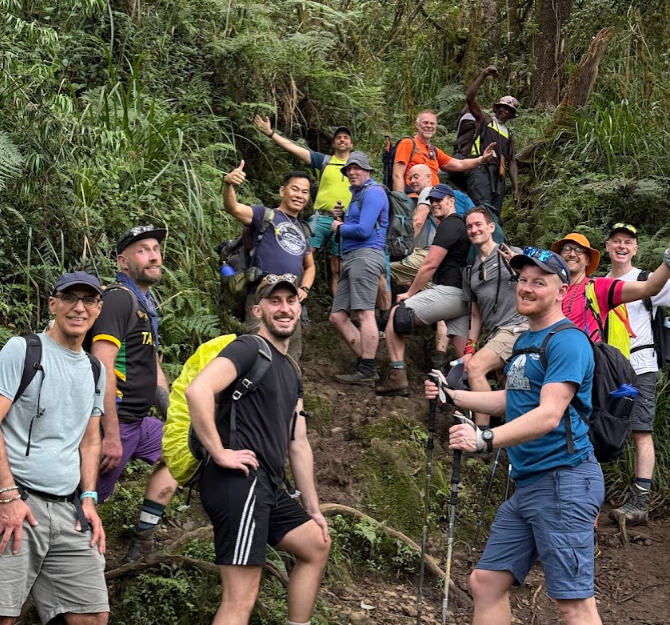
• Practicing with trekking poles
But equally important is mindset.
Kilimanjaro rewards patience.
Pole pole is not just a phrase. It is a strategy.
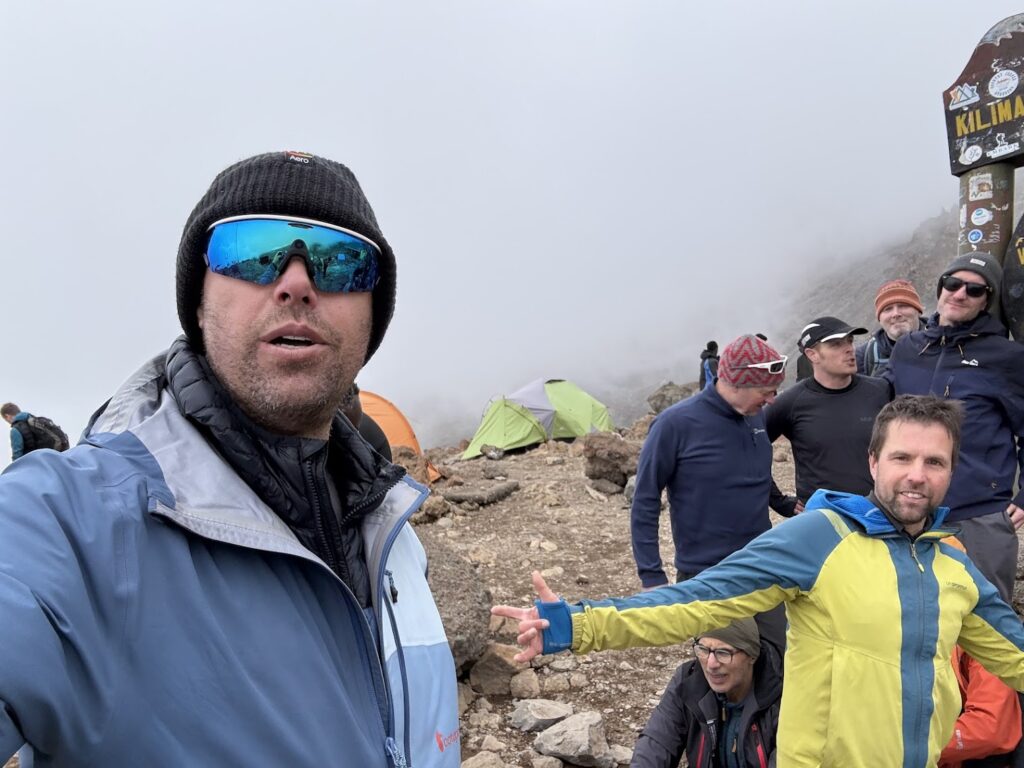
Pride Expeditions and the Power of Partnership
This February 2026 expedition was hosted by Pride Expeditions, led by Nick Read based in Wales. As the Founder and Chief Adventure Officer of Pride Adventures, I am intentional about who we partner with. Pride Expeditions aligns closely with our values of inclusion, challenge, and community driven adventure travel.
Climbing Mount Kilimanjaro via the Machame Route was not a standard Pride Adventures hosted departure. Instead, this was a partner trip, and I joined as both participant and collaborator. Experiences like this allow us to expand our global network while supporting other LGBTQ+ led adventure operators.
Leadership and Global LGBTQ+ Expeditions
Nick Read has built Pride Expeditions into a respected adventure travel company serving the LGBTQ+ community. From Everest Base Camp to Slovenia, Morocco, and beyond, he creates challenging international experiences that bring like minded travelers together.
His leadership on Kilimanjaro was steady and calm. At altitude, that matters. When you are hiking toward 19,341 feet (5,895 meters), you want guides who understand both the mountain and the emotional arc of the journey.
Partnering with Pride Expeditions is something we are proud of, and it is a collaboration rooted in shared mission rather than competition.
The Personalities That Made the Climb
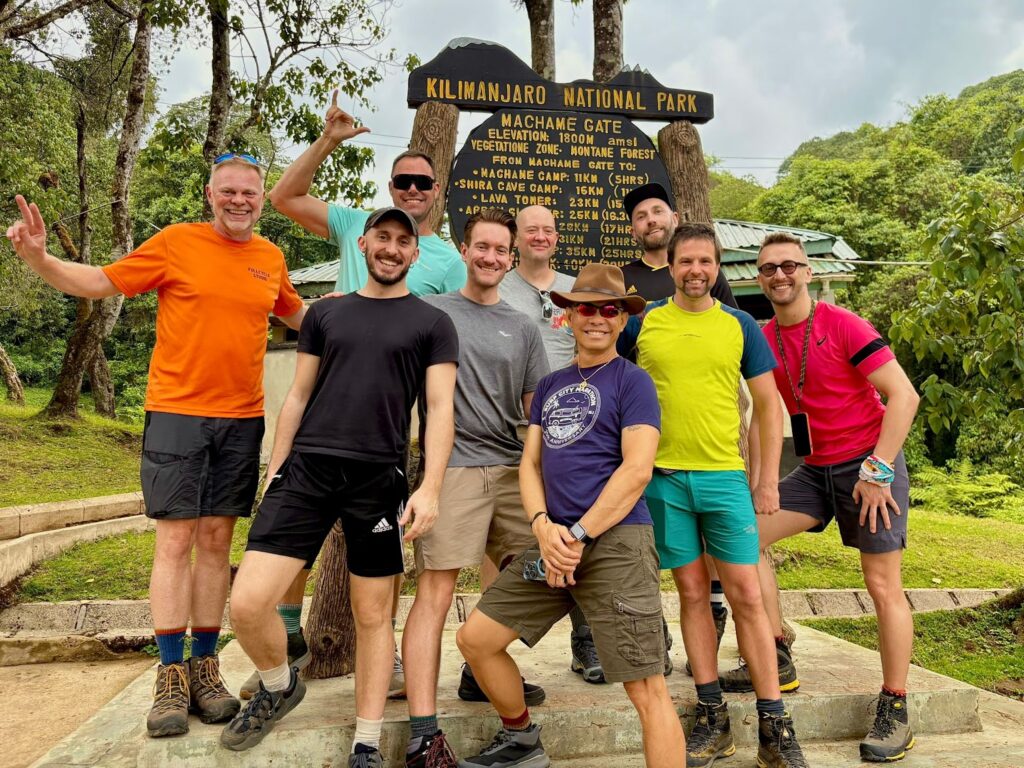
Most of our group was from the United Kingdom, which made the cultural exchange especially fun from my American perspective.
James, who owns a coffee shop back home, brought warmth and humor to every camp. Adam, a social media guru from Wales, was setting up edits and posts long before most of us had even zipped our tents for the night. Mark, who works for an international company and frequently travels to the United States, offered sharp observations about the differences between our cultures.
Marcin and John were our couple on the trip. Marcin, originally from Poland, and John, who has extensive experience in global conservation efforts including work in the Falkland Islands, brought depth and heart to the group dynamic. Watching them support one another during summit morning at nearly 19,000 feet (5,800 meters) was powerful.
Philip, our resident primate expert who works with primates in zoological settings, added fascinating wildlife insight whenever conversations turned to African ecosystems. Jonathan, an active ambassador for Pride Expeditions who has joined Nick on multiple expeditions, embodied preparedness and consistency. Dean from Newcastle, a proud supporter of the UK version of football and a self described giggling badass, kept morale high when altitude tried to test us.
Mansoor was a strong and steady hiker throughout the Machame Route. Jack, our youngest climber, overcame early travel challenges just getting to Africa but fully embraced the experience once he arrived. Alan joined me from the United States and has traveled on several Pride Adventures trips, with more to come.
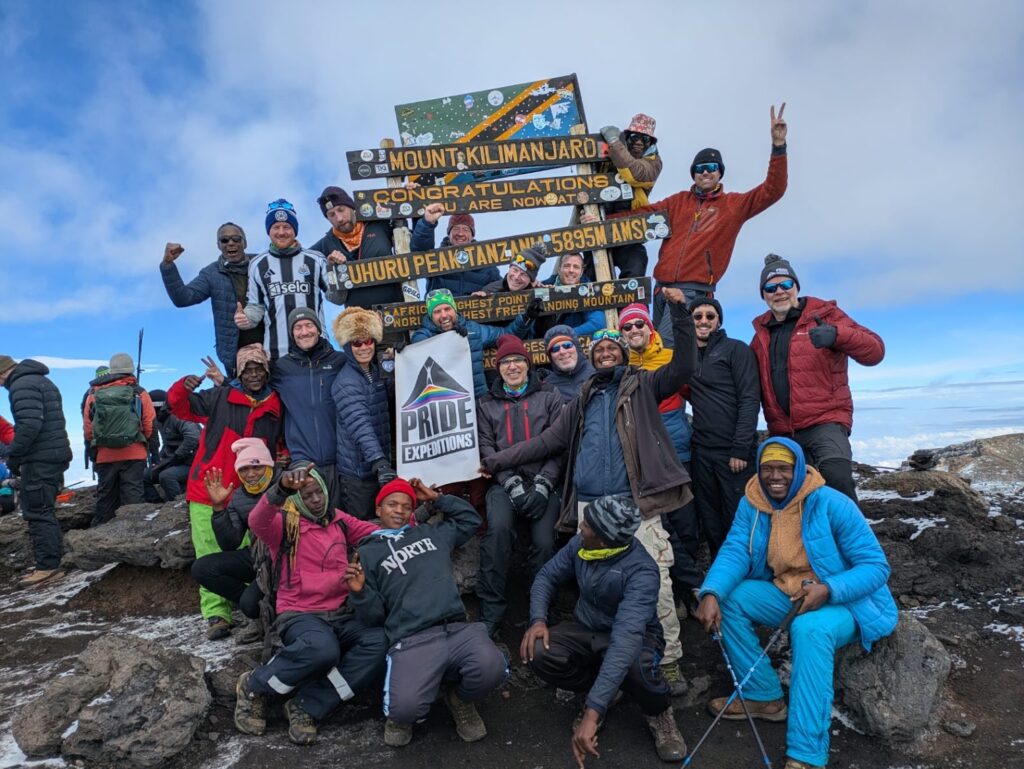
By the time we stood together at Uhuru Peak at 19,341 feet (5,895 meters), we were no longer travelers from different countries.
We were a team.
Celebrating Birthdays at Altitude
Rob and Mark both celebrated birthdays during our time on the mountain. My own birthday had been just before the trip, so it felt like a trio of celebrations strung together at elevation.
There is something unique about marking another year of life while climbing Africa’s highest peak. We laughed, shared cake in camp, and reflected on what it means to choose adventure at this stage of life.
Birthdays at altitude hit differently.
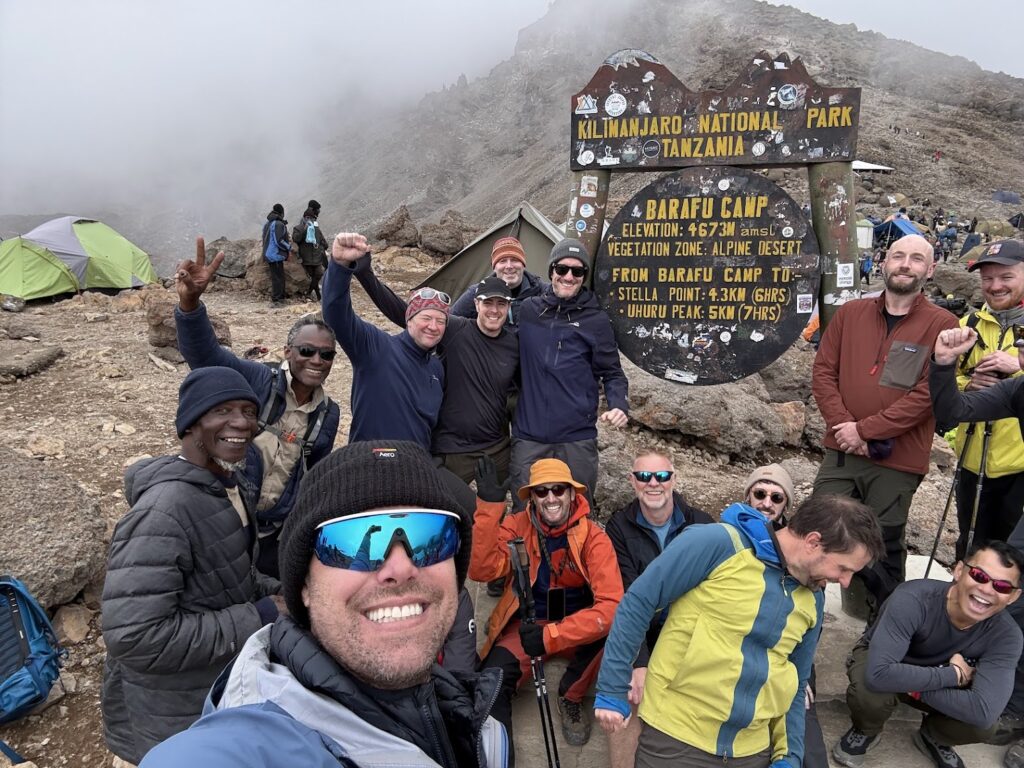
Just Kilimanjaro and the Local Mountain Team
No Kilimanjaro climb happens without the local team.
On the ground in Tanzania, our expedition was operated by Just Kilimanjaro, led by its owner, Methley. Their professionalism and experience were evident from day one.
From Porter to Expedition Leader
Methley’s story is one of progression and dedication. He began working on Mount Kilimanjaro as a porter. Over time, he became a mountain guide. After summiting the mountain hundreds of times, he eventually founded his own company.
That lived experience shows.
Our support team included six mountain guides, three person kitchen team, and twenty four porters. They monitored our oxygen levels daily, ensured we stayed hydrated, and prepared meals that fueled us at elevations exceeding 15,000 feet (4,600 meters).
Climbing Kilimanjaro is never a solo accomplishment. It is a collective effort built on trust and teamwork.
Supporting a Cleaner Kilimanjaro
Methley is currently developing an initiative focused on keeping Mount Kilimanjaro cleaner. Waste management on popular routes can sometimes become an afterthought for both foreign climbers and support crews.
His goal is to create a structured effort to preserve Africa’s highest peak for future generations.
As leaders in LGBTQ+ group travel, we believe responsible adventure must include stewardship. We look forward to supporting and promoting this initiative once it is formally established.
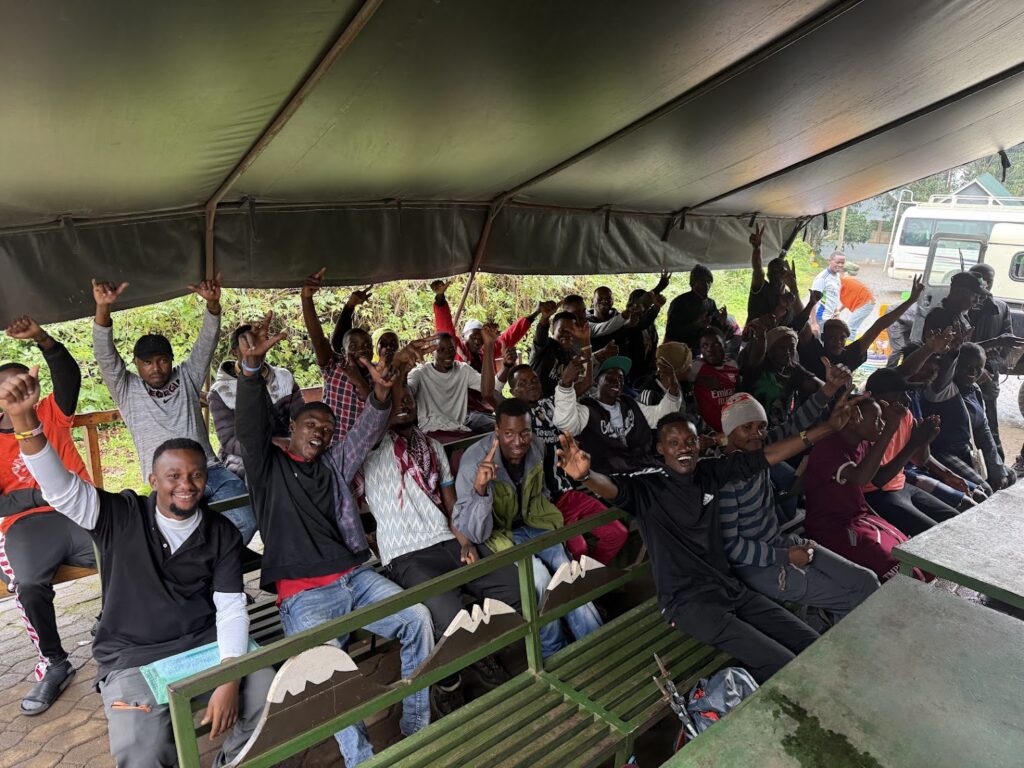
Community at 19,341 Feet (5,895 meters)
This climb reinforced something important for me as Founder of Pride Adventures.
Active and even extreme adventure travel builds connection in ways few other experiences can.
When you struggle together at altitude and stand at Uhuru Peak together, something shifts.
Community at 19,341 feet (5,895 meters) hits differently.
See the Climb in Action
I’ve included a few select photos throughout this article, but photos only tell part of the story.
We created several short videos capturing different moments from this February 2026 expedition.
You can watch those on Instagram:
👉 https://www.instagram.com/prideadventures_lgbtq
Adventure is best felt, not just read about.
Explore Upcoming Adventures
If this Kilimanjaro experience inspires you, I invite you to explore our upcoming adventures:
👉 https://prideadventures.com/upcoming-trips/
To learn more about Pride Expeditions and their global LGBTQ+ expeditions:
👉 https://www.prideexpeditions.co.uk/upcoming-events
And for those specifically researching Kilimanjaro climbs, we highly recommend Just Kilimanjaro:
👉 https://www.just-kilimanjaro.com/
We are grateful for the opportunity to climb together.
And sometimes, that means 19,341 feet (5,895 meters).